For many, the American dream has slowly morphed into a monthly juggling act of credit card statements, medical bills, and high-interest personal loans. The weight of multiple due dates and varying interest rates can be more than just a financial burden; it is a psychological anchor that prevents growth. This is where the concept of debt consolidation enters the frame—a promise of simplicity and lower costs. However, not all consolidation efforts are created equal. To truly save money, one must navigate the nuances of low-interest debt consolidation loans with surgical precision.
Imagine Sarah, a marketing professional with $20,000 in credit card debt spread across four cards. Her average interest rate is a staggering 22%. Every month, she pays over $400 just in interest, barely touching the principal. For Sarah, and millions like her, a low-interest debt consolidation loan isn’t just a convenience; it’s a lifeline. But the ‘low interest’ label can be deceptive if you don’t look at the fine print.







The Mechanics of True Savings
Debt consolidation works by taking out a new loan to pay off multiple smaller debts. The goal is twofold: to have a single monthly payment and, more importantly, to secure a lower Annual Percentage Rate (APR) than the weighted average of your previous debts. If your current debts average 18% APR and you consolidate into a loan with a 10% APR, you are fundamentally changing the math of your financial life.
However, the interest rate is only one part of the equation. To actually save money, you must consider the loan term. A common trap is extending a 3-year debt into a 7-year consolidation loan. Even with a lower interest rate, you might end up paying more in total interest over the longer life of the loan. A ‘real’ savings loan keeps your payoff timeline the same or shorter while slashing the rate.
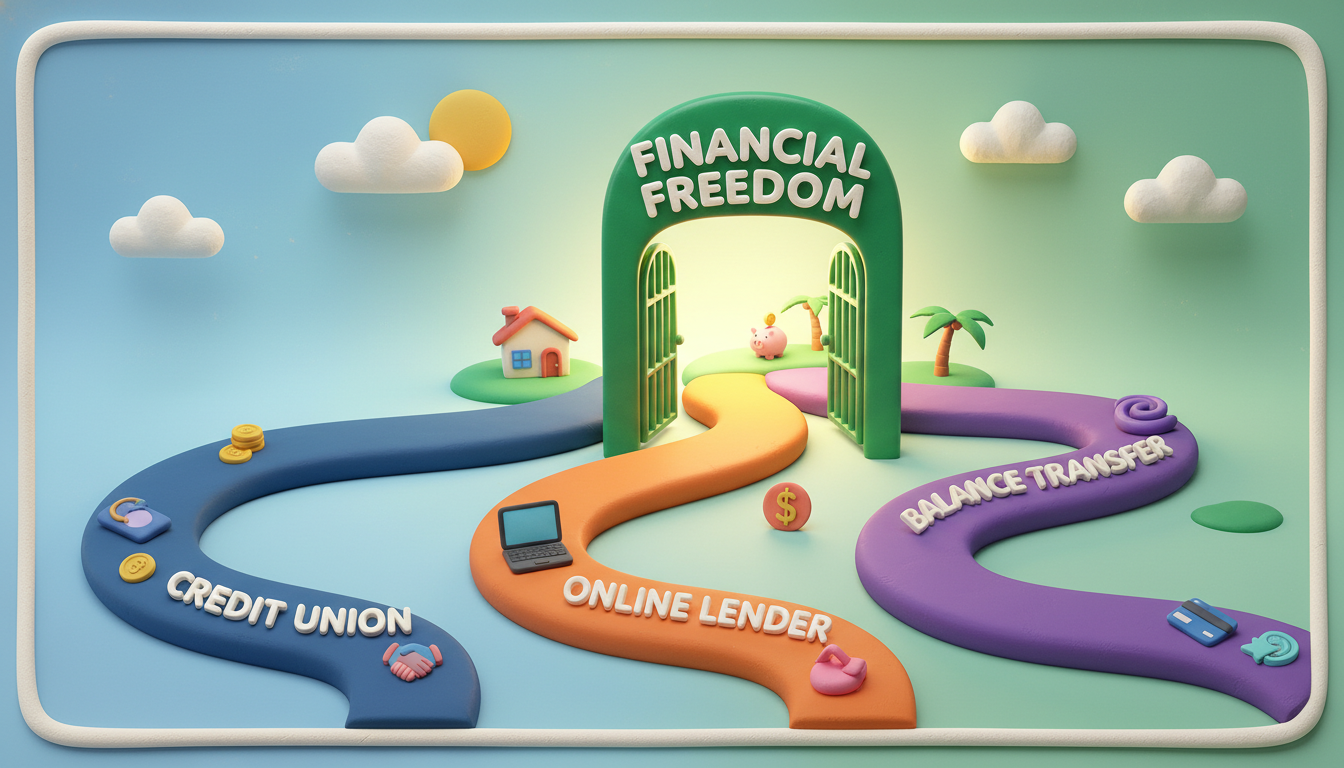
Where to Find Genuine Low-Interest Loans
1. Credit Unions: Often overlooked, credit unions are member-owned and typically offer lower rates and fewer fees than traditional big banks. They are often more willing to look at your full financial picture rather than just a credit score.
2. Online Marketplace Lenders: Platforms like SoFi, Marcus, or LightStream have lower overhead than physical banks. They often pass these savings to consumers with high credit scores in the form of incredibly competitive APRs.
3. Balance Transfer Credit Cards: While not a ‘loan’ in the traditional sense, a 0% APR balance transfer card is the pinnacle of low-interest consolidation. If you can pay off the balance within the introductory period (usually 12-21 months), you effectively pay zero interest. The caveat? You need a stellar credit score to qualify and discipline to avoid new charges.
Identifying the Hidden Costs
A low interest rate can be negated by high fees. When shopping for a loan, keep a sharp eye out for:
- Origination Fees: Some lenders charge 1% to 8% of the loan amount just to process it. If you’re borrowing $30,000, a 5% fee is $1,500—money that is taken out of your loan before you even see it.
- Prepayment Penalties: If you find yourself with extra cash and want to kill the debt early, some lenders charge you for the ‘lost interest.’ Avoid these at all costs.
- Late Fees and Protection Insurance: While common, ensure these are reasonable and not baked into your ‘low’ rate.
The Behavioral Component: The Silent Deal-Breaker
The most dangerous part of debt consolidation isn’t the loan itself; it’s the ‘cleared’ credit cards. When Sarah pays off her $20,000 in credit card debt with a consolidation loan, her credit cards suddenly show a zero balance. The temptation to use them again is immense. If Sarah spends on those cards again while still paying off the consolidation loan, she has effectively doubled her debt. To actually save money, the consolidation must be accompanied by a strict budget and, in many cases, physically hiding the old cards.

Determining If You Should Consolidate
Before signing the dotted line, ask yourself three questions:
1. Is the APR lower? Use a debt calculator to find your current weighted average APR. If the new loan isn’t at least 2-3% lower, the fees might eat your savings.
2. Is my credit score ready? Low-interest loans are reserved for those with good to excellent credit. If your score is currently low due to high utilization, you might want to spend three months focusing on small pay-downs to boost your score before applying for the consolidation loan.
3. Am I addressing the root cause? Debt is often a symptom of a spending habit or an income gap. Consolidation treats the symptom, but only a lifestyle change cures the disease.
Conclusion: The Path Forward
Low-interest debt consolidation loans are powerful tools when used with intention. They offer a path to stop the bleeding of high-interest payments and provide a clear, visible finish line for your debt. By focusing on the total cost of borrowing—including fees and time—and committing to a change in spending habits, you can transform a mountain of debt into a manageable molehill.
Financial freedom isn’t just about how much you make; it’s about how much you keep. By strategically lowering your interest rates today, you are essentially giving yourself a raise for the future. Take the time to compare offers, read the fine print, and make the move that finally breaks the cycle of high-interest debt.
